
Construction
What a Toronto Multiplex Actually Costs to Build
By Afshin Nabavi, President, Broker of Record, Land Consultant
July 4, 2026 · 7 min read
Real Toronto multiplex cost benchmarks by unit count, from duplex to 6-plex: hard cost ranges from Altus GTA data, the city charges you will and will not pay, and the variables that move the number.
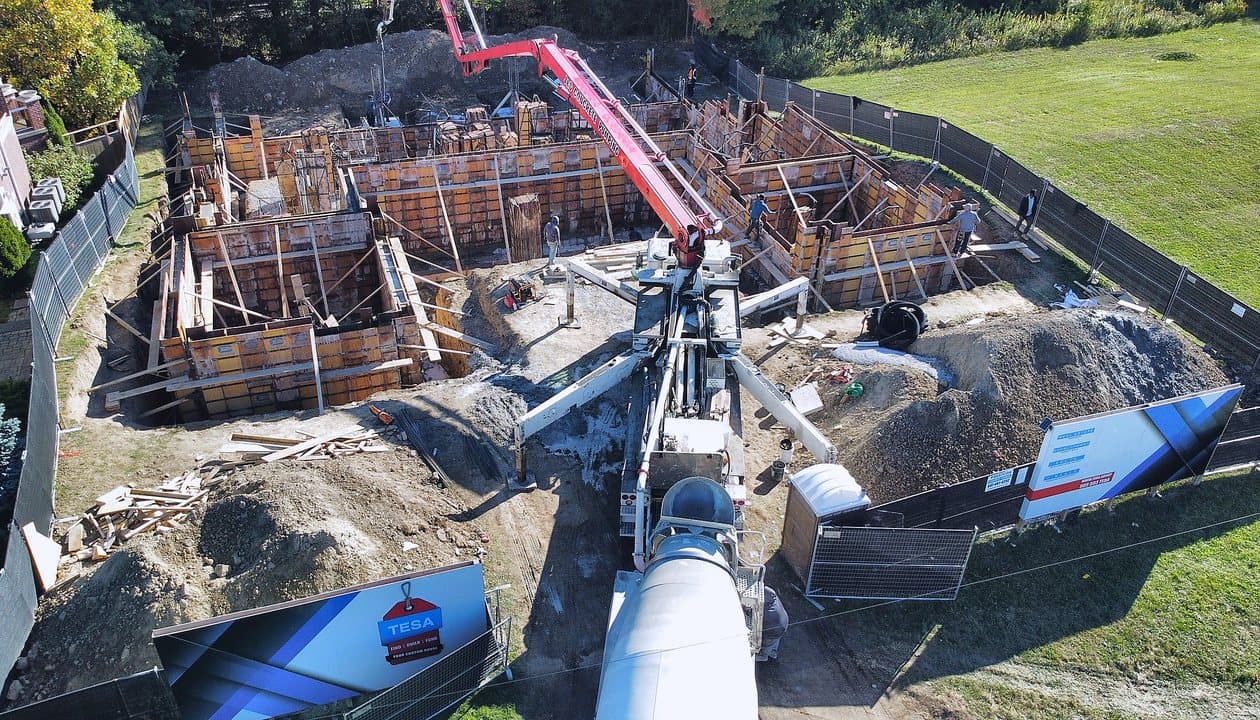
Budget roughly $200 to $330 per square foot ($2,153 to $3,552 per m²) in hard construction costs for a Toronto multiplex, depending on building form and finish level, based on Altus Group's 2025 GTA benchmarks (data as at January 31, 2025). On a typical fourplex of about 4,200 square feet (390 m²), that works out to approximately $965,000 to $1,135,000 of hard cost before land, professional fees and taxes. The city-charge side is lighter than most owners expect: effective July 24, 2025, Toronto exempts units two through six in developments of up to six units from development charges (the per-unit fees the City levies on new housing), and the first unit still pays. Where a house on the lot is demolished, Chapter 415 credits the demolished home's charge against what is owed, provided the demolition permit was issued within the 60 months before the complete building permit application, so a teardown-and-rebuild multiplex often owes no City of Toronto development charges at all. The breakdown below lets you benchmark your own lot against real dollar ranges.
Hard cost benchmarks by unit count
| Build | Illustrative floor area | Hard cost band (Altus 2025, GTA) | Approximate hard cost total |
|---|---|---|---|
| Duplex | ~2,400 sq ft (223 m²) | $200 to $275 per sq ft ($2,153 to $2,960 per m²) (single-family and row bands) | $480,000 to $660,000 |
| Triplex | ~3,300 sq ft (307 m²) | $230 to $270 per sq ft ($2,476 to $2,906 per m²) (stacked townhouse band) | $760,000 to $890,000 |
| Fourplex | ~4,200 sq ft (390 m²) | $230 to $270 per sq ft ($2,476 to $2,906 per m²) (stacked townhouse band) | $965,000 to $1,135,000 |
| 6-plex | ~5,800 sq ft (539 m²) | $245 to $330 per sq ft ($2,637 to $3,552 per m²) (wood-framed apartment band) | $1,420,000 to $1,915,000 |
The floor areas above are illustrative assumptions for typical Toronto infill lots; your buildable area comes from your zoning envelope and your architect. The dollar ranges come from Altus Group's Canadian Cost Guide GTA tables and cover hard construction costs only. Land, professional fees, city charges, financing and taxes are all additional. Every figure here is approximate: a planning band, not a quote.
Where do these numbers come from?
Altus Group's Canadian Cost Guide is the standard industry benchmark for budgeting Toronto residential construction. The 2026 edition, released April 23, 2026, draws on more than 6,500 development projects and publishes hard cost data by asset class and city on a per-square-foot basis. There is no line in the guide labelled "Toronto fourplex", so we bracket multiplex product with its nearest analogues from the 2025 GTA tables. Row townhouses run roughly $205 to $265 per square foot ($2,207 to $2,852 per m²) and single-family homes $200 to $275 per square foot ($2,153 to $2,960 per m²). Three-storey stacked townhouses sit at $230 to $270 per square foot ($2,476 to $2,906 per m²), and wood-framed apartment buildings up to six storeys land at $245 to $330 per square foot ($2,637 to $3,552 per m²).
Finish level stretches those bands hard. Altus quotes a premium of up to $245 per square foot ($2,637 per m²) for high-quality finishes in condominium and apartment buildings, not in its wood-framed categories, and its custom single-family band, roughly $520 to $1,130 per square foot ($5,597 to $12,163 per m²), shows how far finish and complexity can push a residential build. A rental-grade 6-plex and a condo-grade 6-plex are two different budgets in the same shell.
How many units will zoning let you build?
Four units are permitted as-of-right in low-rise neighbourhoods citywide; as-of-right means no rezoning application, just a building permit that complies with the by-law. Since City Council's June 2025 decision, up to six units are permitted as-of-right in a detached building in nine wards (the Toronto and East York district plus Ward 23, Scarborough North), and other wards can opt in. A citywide sixplex permission has not been adopted. Check your ward, and that the building will be detached, before you assume a 6-plex.
What does the City of Toronto actually charge?
Development charges are the City fee everyone asks about first. For context, the non-rental schedule effective June 26, 2025 charges:
| Unit type (non-rental schedule) | DC per unit |
|---|---|
| Single or semi-detached | $137,846 |
| Row/townhouse unit, 2+ bedrooms | $113,938 |
| Apartment, 2+ bedrooms | $80,690 |
| Apartment, 1 bedroom or bachelor | $52,676 |
Multiplex builders mostly skip this table. In July 2025, Council adopted the item with Mayor Olivia Chow's amendment, which extended the exemption from development charges and parkland dedication to the fifth and sixth units (By-law 845-2025). The first unit still pays. Effective July 24, 2025, the second through sixth units in developments of up to six units are exempt, with no end date, so on a duplex through 6-plex built on a single lot only the first unit pays, and on a teardown the demolition credit described above can cover that one too.
Two more City moves matter for timing. Council removed the annual inflationary indexing of development charges for 2025 and 2026 (By-law 594-2025), freezing rates at the June 26, 2025 schedule, and By-law 1261-2026 has since moved the next indexing out to May 1, 2030. Then on June 23, 2026, the City announced it secured up to $1.5 billion over 10 years through the Canada-Ontario Partnership to Build, tied to lower development charges, and on July 30, 2026 Council enacted By-law 1261-2026: a temporary cut of 40% or 60%, depending on unit type, on every unit that still pays. On a building of up to six units that is only the first unit; from seven units up it is every unit. It applies only once the City's Transfer Payment Agreement with the Province is signed, which the City had not confirmed as of September 30, 2026, so pull the current schedule before you lock a budget.
Parking is the quiet saving. Toronto removed most minimum automobile parking requirements for new development (adopted December 15, 2021, in force February 3, 2022), replacing minimums with maximums, so a duplex through fourplex is not required to provide any parking. Accessible parking requirements were retained and were refined for applications received after March 31, 2025. You can still build spots where the market wants them; the by-law just stops forcing you to.
Do you pay HST on a multiplex build?
If you build rental, plan the HST from day one, then plan to get most of it back. The enhanced purpose-built rental rebate returns 100% of the federal part of HST on qualifying new rental projects: at least four private apartment units, with at least 90% of residential units designated for long-term rental. Construction has to begin after September 13, 2023 and on or before December 31, 2030, and the project has to be substantially complete by December 31, 2035. Ontario mirrors it with a 100% rebate of the 8% provincial part. A qualifying 4-plex to 6-plex built as rental can effectively recover the full 13% HST that self-assessment would otherwise cost. Osler estimates the combined relief at roughly $65,000 per unit on a typical project; treat that as an illustration rather than a guarantee, since the actual amount scales with unit value at 13%. Note the threshold: a rental duplex or triplex sits below the four-unit minimum and does not qualify.
What moves the number up or down?
- Building form. Stacked, townhouse-style layouts price in the $230 to $270 per sq ft ($2,476 to $2,906 per m²) band; a small apartment-style building with common circulation prices closer to $245 to $330 per sq ft ($2,637 to $3,552 per m²). The same six units can land in different bands depending on how they stack.
- Finish tier. Altus's high-quality finish premium (up to $245 per sq ft [$2,637 per m²]) is quoted for condominium and apartment buildings; on a multiplex, price the finish level with your contractor.
- The lot itself. When we underwrite multiplex sites at TESA, the spread between an easy lot and a hard one comes from below grade and at the property line: how much excavation the design needs, what shape the existing services are in, and how tight the access is for equipment. None of that shows up in a per-square-foot benchmark, which is why benchmarks screen deals and site work prices them.
- Escalation. Statistics Canada's Building Construction Price Index for Q1 2026 shows residential costs up 0.6% quarter-over-quarter and 2.8% year-over-year across the 15-CMA composite, with Toronto among the smallest residential quarterly increases at 0.1% (Calgary was flat). Near-flat local escalation supports modest escalation allowances in a 2026 budget. Carry contingency anyway; escalation data describes the market, not your lot.
Running the screen on your own lot
Before you commission a feasibility study or talk to a lender, you can get a defensible first number in an afternoon. Take your realistic buildable area and multiply it by the band that matches your form and finish. Add land, and note that on a lot with up to six units only the first unit pays City development charges. If it is a rental hold with four or more units, model the HST rebate. Then stress the result against the current development charge schedule, and count the lower By-law 1261-2026 rate on the first unit only once the City confirms its funding agreement with the Province is signed. This is the same screen we run at TESA before a full feasibility study: we underwrite the lot, price the structure package against these bands, and file against the fee schedules in force on the day the application goes in. If your screen survives those checks, the deal is worth the study.
Common questions
How many units can you build on a residential lot in Toronto?
Up to four units are permitted as-of-right in low-rise neighbourhoods citywide. Since June 2025, up to six units, in a detached building only, are permitted as-of-right in nine wards: eight in the Toronto and East York district, plus Ward 23 in Scarborough North. City Council chose not to go citywide; another ward is added only if its councillor asks the City to extend the permission and Council adopts the change. City staff report on how multiplexes are working by the end of 2027.
How much does it cost per square foot to build a multiplex in Toronto?
Altus Group's 2025 Canadian Cost Guide put GTA hard costs at roughly $230 to $270 per square foot ($2,476 to $2,906 per m²) for a 3-storey stacked townhouse and $245 to $330 per square foot ($2,637 to $3,552 per m²) for a wood-framed apartment building up to six storeys. CMHC's Housing Design Catalogue prices small Toronto stacked-townhouse and fourplex designs higher, at $296 to $425 per square foot ($3,186 to $4,575 per m²) on early-2025 pricing, so treat the low end of any published range with caution on a small site. These are hard construction costs only. Land, city charges, taxes and design fees are extra. Altus released a 2026 edition in April 2026, so confirm current figures and get a contractor quote before you budget a project.
Do you pay development charges on a Toronto multiplex?
On units two through six, no. Effective July 24, 2025, By-law 845-2025 exempts the second through sixth units in developments of up to six units from City development charges and from parkland dedication, with no end date. The first unit still pays, unless the building replaces a legally established home demolished under a permit issued within the five years before the complete building permit application; then the demolished home's charge is credited against it, up to the full amount. Larger projects pay per-unit rates, such as $80,690 per non-rental apartment with two or more bedrooms under the schedule effective June 26, 2025. By-law 1261-2026, enacted July 30, 2026, cuts the City charge on every unit that still pays by 40 or 60 per cent depending on unit type, but only once the City's funding agreement with the Province is signed, which the City had not confirmed as of September 30, 2026.
Does a Toronto multiplex need parking?
No. Toronto removed most minimum automobile parking requirements effective February 3, 2022, replacing minimums with maximums, so small multiplexes are not required to provide parking. Accessible parking requirements were retained, and you can still choose to build parking where it adds value.
Do you pay HST when you build a rental multiplex in Toronto?
New rental housing triggers GST/HST, but qualifying purpose-built rentals with at least four private apartment units (at least 90 per cent held for long-term rental, construction begun after September 13, 2023 and on or before December 31, 2030) get a 100 per cent rebate of the federal portion, and Ontario mirrors it with a 100 per cent rebate of the 8 per cent provincial portion, effectively recovering the full 13 per cent HST. Confirm eligibility with a tax advisor.
Sources
- Expanding Multiplex Permissions: Sixplexes Citywide Study (City of Toronto)
- Multiplex Housing (City of Toronto)
- Toronto waives development charges for sixplexes to spur gentle density housing (Ontario Construction News)
- Review of Parking Requirements for New Development (City of Toronto)
- City of Toronto Residential Development Charges Rates, Effective June 26, 2025 (City of Toronto)
- Toronto Cuts Homebuilding Charges by Up to 60% as Governments Put $1.5 Billion Behind Deal (Hashtag Investing)
- Development Charges, Bylaws, Rates & Study (City of Toronto)
- Development Charges Overview (City of Toronto)
- Toronto City Council Waives Development Charges On Sixplexes (Storeys)
- City of Toronto By-law 594-2025 (development charge indexing removed for 2025 and 2026) (City of Toronto)
- City of Toronto secures $1.5 billion in Canada-Ontario Partnership to Build funding to support housing and reduce development charges (City of Toronto)
- Building Permit Fees (City of Toronto)
- 2025 Canadian Cost Guide (private sector cost-per-square-foot tables, GTA column) (Altus Group)
- Altus Group Releases its 2026 Canadian Cost Guide (Altus Group)
- The Daily, Building construction price indexes, first quarter 2026 (Statistics Canada)
- MLI Select (CMHC)
- CMHC MLI Select, Multi-unit At-a-glance (©2025) (CMHC)
- Enhanced GST/HST Rebate for Purpose-Built Rental Housing: Latest Developments (Stikeman Elliott LLP)
- Ontario enhances the HST rebate for purpose-built rental properties (Osler, Hoskin & Harcourt LLP)
From drawings to keys
TESA Development handles planning, design, approvals and construction on residential and commercial projects across the Greater Toronto Area. A feasibility study is where the budget starts.
Keep reading
Want more of our guides in your Google results? Add TESA as a preferred source on Google.